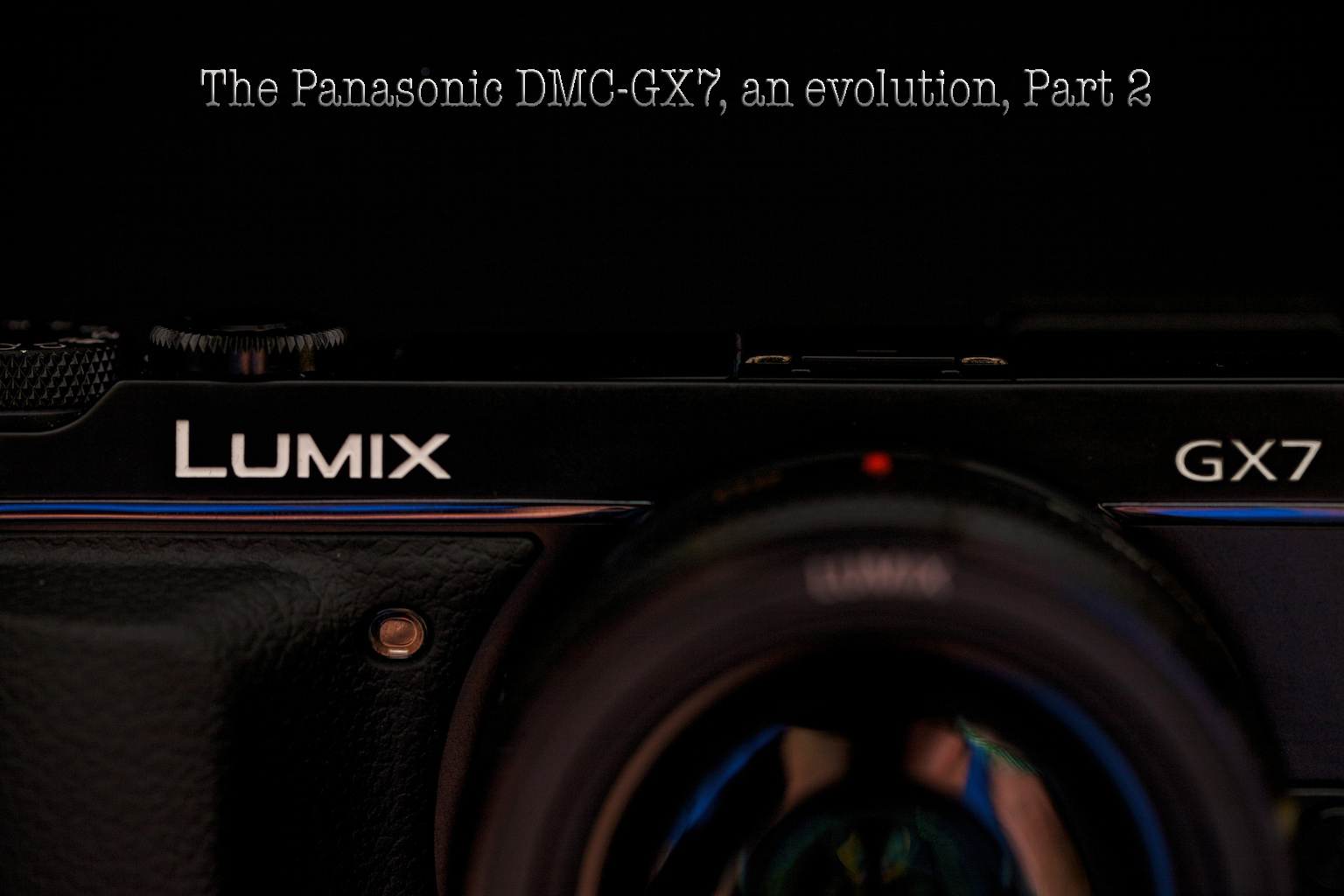
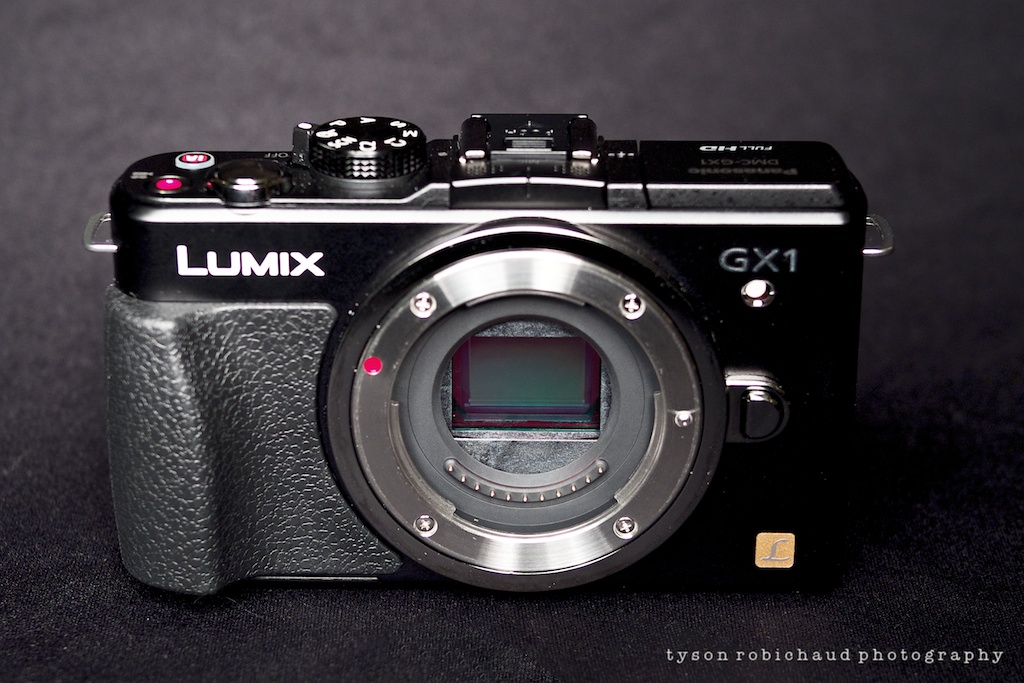
In part 1, I gave you my opinion and rundown on the physical, ergonomic changes along with a couple of the key, new features to the GX lineup. Now, we can take a look at how this camera has evolved from a performance point of view compared to the GF1 and GX1. C’mon in for some videos and comparisons…
Tag Archives: micro 4/3
*The Panasonic GX7, an Evolution, part 1
In this review, I want to focus on and outline my favorite additions that the GX7 has introduced to micro 4/3 shooters or those who have been shooting other Panasonic m4/3 cameras from a features standpoint. I’d also like to look at how the GX7 has progressed physically from the GF1 and GX1. Many of the features on the GX7 are not unique, but may be new for micro 4/3, or at least Panasonic system users, and I’ve been curious to shoot with this camera since the rumors started circulating. In this first part, I want to go over how this camera feels in the hand, how it interacts with the shooter, and what the new bells and whistles have provided vs the previous cameras. The next part will focus on the performance of the camera, actual image quality, et al (click here to read Part 2). I will also be comparing this camera to my Olympus OM-D E-M5 in a future article, but for now, we’ll focus on the GX7 and the advancements it has made compared to it’s predecessors.
*Ladies and Gentlemen, The Panasonic GX7: A first look.
When Panasonic started to leak the GX7 micro 4/3 camera, I, along with many micro 4/3 fans started to pine for what seemed on paper to be one of the best offerings for the system yet. Compact, nice grip, IBIS, focus peaking, a step forward in IQ, good video options, integrated EVF, WiFi, rugged chassis… I’m no fanboy, but I will admit to feeling that Panasonic has done a better job at the interface side of things, compared to Olympus in my experience with cameras from both manufacturers. If I could gain access to what I saw as Oly’s two benefits in IBIS and newer sensor tech in a Pana body with it’s more streamlined, yet still customizable interface, I had to see if it could live up to the hype. I’ve long felt that if Oly could re-engineer it’s interface and remove some of the frustrating quirks that plagued the EM5, or, if Panasonic could take a step forward in sensor performance and integrate a decent IBIS system, either could have a quintessential micro 4/3 juggernaut on their hands. Is the GX7 the answer to those desires?
*Super deal on fisheye and Topaz Re-Style on sale for 4 more days!
A couple super deals have popped up. Please excuse the quick break from the normally scheduled programing… For my fellow micro 4/3 shooters, the above lens is temporarily on sale, and for all my fellow post processing enthusiasts, Topaz Re-Style is 50% off for just 4 more days.
The Bower (Rokinon/Samyang/whoever else they sell this lens under) micro 4/3, 7.5mm f/3.5 Fisheye, is now on sale for $199 at B&H HERE (price is now fluctuating between $200-250 or so), and also includes the 4% reward and Free Shipping! If you’ve been on the fence, this is an amazing deal on a great lens (Normally about $300). You can read my opinions on the Rokinon version (same lens) HERE. Oddly, it is only the Bower version that is on sale, but it is the same lens as the Rokinon that I own, use and love.
Also, Topaz Re-Style is about to wrap up it’s introductory sale this Saturday, at which point it will go up to “full” price ($59.99). Right now, through Saturday, you can get Re-Style for 50% off HERE for $29.99 when using the code “restyleit”, enter the discount code at checkout. I recently reviewed Re-Style HERE. Also, you can get the $30 discount off of the full collection of Topaz plugins by using that same “restyleit” discount code.
Thank you, happy shooting and carry on…
Cheers,
Tyson
*The Mirrorless Diet, how to lose weight instantly! Part 3
PART 3: Processing your shots
After applauding your choice to invest in featherweight cameras and optics that have the image quality to rival top end digital SLR’s (well, in many scenarios anyway), it all comes down to processing, and turning those files into the beautiful images you knew they’d become. While weight is no longer a huge part of the equation, it is now time to see if we’ve compromised our ability to document our travels for posterity in all their pixel rich glory…
*The Mirrorless Diet, how to lose weight instantly! Part 2
PART 2: Shooting your trip
You’ve already suffered through my long winded gear explanation in the previous post about gear weight in part 1. Here are some of the images and techniques I use with the gear being utilized for each shot, laid out. The above panorama shot was a handheld series of 5 frames, shot in portrait orientation using the Canon EOS-M and 22mm f/2 lens. The third and final part in this series will focus on the actual processing of the shots and won’t really have much to do with backpacking per se, nor the weight saved, but hopefully can show that with these small cameras, image quality is not compromised.
*The Mirrorless Diet, how to lose weight instantly! Part 1
PART 1: Preparing for a trip
Have you ever had to pack for a trip, a hike, climb, vacation or another adventure where you’d be carrying everything on your back or slung over your shoulder? Gear laid out on the floor the night before leaving for the trip after having unpacked and repacked to see if you could fit everything in less space getting rid of everything you can to save weight. For those that saw their toothbrushes in half to shave off a few grams, or anyone that could stand to lose a little weight in the camera bag, this series of articles may be useful. Now, the question is, can we do this, and still carry quality photographic gear with us?
This will be the first part in a three part article focused on capturing images while backpacking and wanting to keep weight down while not compromising image quality. It is also potentially useful for any travel situation where gear weight may become cumbersome.
I’d like to thank Yukon Trading Company, Marmot, JetBoil, LEKI Trekking Poles, 43rumors.com, Expert Shield screen protectors, and B&H Photo for the continued support, and particularly for much of the stuff provided for me during this trip. Losing weight isn’t always fast and cheap, but they’ve helped make it sexy. Throughout these articles, I’ll be mentioning and linking to various products that I use(d) and highly suggest looking into. Fortunately for me, we got hooked up with companies that put quality at the top of their list. It doesn’t hurt that they also engineer some of the best, lightest and highest performing gear on the market, so, thanks guys!
Never has weight been more a factor for me than when trying to stuff all my gear into a pack with the realization that I’m going to have to carry all this stuff on my back for days on end, all while climbing, hiking and sliding around in the snow. I will start by disclosing that I am far closer to resembling a photographer than a back country, mountaineering aficionado. I’ve certainly been adventurous throughout my life, spending many nights in the elements, climbing and hiking my way to the next spot so that I may eat dried fruit, ramen and nuts for dinner, or do my best to create aches in areas I was previously unaware my body had by forgoing any type of sleeping pad or pillow. Most of the time, when I travel, or set out on any type of adventure, photography is a very large part of it, and I’ve tended to sacrifice other comforts to enable the room for my camera gear. Since adopting a mirrorless setup, I’ve not had to sacrifice at all…
*Panasonic Lumix 100-300mm, waste of time, or amazing value?
One huge benefit to a smaller sensor is the effective focal length multiplier. Sure you can crop into an image captured at a wider angle, or on a larger sensor but as we have seen in the focal length vs sensor size post, when utilizing a smaller (relative to full frame) sensor, you can actually decrease your depth of field with the same focal length if shot from a fixed location, all while generically increasing your focal length by way of the effective multiplier in that smaller sensors crop into the larger image circle. Aperture is aperture as far as exposure is concerned, so even by this standard, f/5.6 is relatively quick when you consider the focal length and price. This said, is the Lumix G Vario 100-300mm f/4-5.6 (<UPDATE! click the link to see it at B&H, and if you click on “Savings Available” the price is down to $499 if you purchase one of the three things that qualify, like the $10.99 software…) worth the price of admission when you consider you get a 600mm lens able to shoot at f/5.6? Let’s see…
*My, how the mighty (prices) have fallen. The GX1, best bang for the buck?
I’m sure there are new cameras on the horizon. With every camera manufacturer pumping a few new bells and whistles into newer body styles and wrapping it around warmed over sensor tech, those among us who play the patient opportunists really benefit. I held off on the GX1 when it was released and opted for the G3 when upgrading from my GF1. I gained the beautiful EVF, and at the time saved about $500 (when looking at the GX1 + add on EVF). I’ve since been running a two camera setup (much as I do with my full frame work setup) as it allows me to always have a backup as well as be able to eliminate much in the way of lens changes. Because I use the Olympus OM-D E-M5 as well, and I’ve recently traded my G3 to my brother in law for favors yet to be determined, I felt I could justify a compact body, sans EVF again. Enter the GX1 which is now down to only $250 just about everywhere! (it’s available at B&H – CLICK HERE – with 2% reward and free shipping). C’mon in to see a couple shots of and with the GX1…
*Moving upward and onward!
Hello everyone! You may have noticed that I’m quietly adding content to the site. This is being done to try and make a more complete resource for those visiting the site to reference specific tutorial articles or find gear reviews, etc. The biggest changes are the new “Tutorial” “Review” and “MyGear” pages up at the top of the page. I will be trying to catalog the more popular tutorials and reviews for easy reference, and the new gear page has allowed me to link certain cameras, lenses and miscellaneous gear that I use to my affiliate links at B&H. Yup, you read that right. I’ve finally succumbed to the monetary necessity of trying to make a little coin to keep the site going. Read on for my reasoning and ever cheesy gratitude…