*Lensbaby’s brand new Edge 80 Optic!

February 14th, 2012 – Uh oh, don’t look now.  Lensbaby has further diversified their lineup with a sharp, solid portrait lens with the same quirky capability of that signature Lensbaby look…  It’s been a busy winter for Lensbaby.  Out now and available immediately, the new Edge 80 optic.  Like the Sweet 35 before it, the Edge 80 has the ability to control the aperture of the optic without having to use the magnetic drop in disks necessary with the standard optics.  An 80mm f/2.8 Flat Field focus Optic with a 12 blade circular, user controlled aperture mechanism is great for anything from portraits to street shooting.  Read on for more examples and links…

Continue reading

*Digital Film Tools – Film Stocks Plug-in!

Officially announced and available immediately for $95usd (still image plugin) or $195usd (video plugin) this new offering from Digital Film Tools gives you the same amazing layer based control as Tiffen Dfx v.3,  for 288 different film stock replications.  Read on for examples and more info…

Continue reading

*Everything you need to know about digital photography (well, almost). Two years of tips, tricks and various freebies, revisited.

With my blog’s second anniversary coming up, I wanted to thank everyone that has stopped by, commented and added to the content.  It’s been a fun couple of years and has been far more educational for me than I’d ever thought it would have been.  I wanted to make a list of my more popular posts as well as some that can help some of us who may be just stumbling into the fold.  Any of us who have recently acquired a new camera and may be wanting to learn how to use it to its potential, or are looking to build up a few post processing techniques, I’ve compiled some of the more useful and popular posts below…

Continue reading

*Lensbaby’s sweet, ‘Sweet 35’

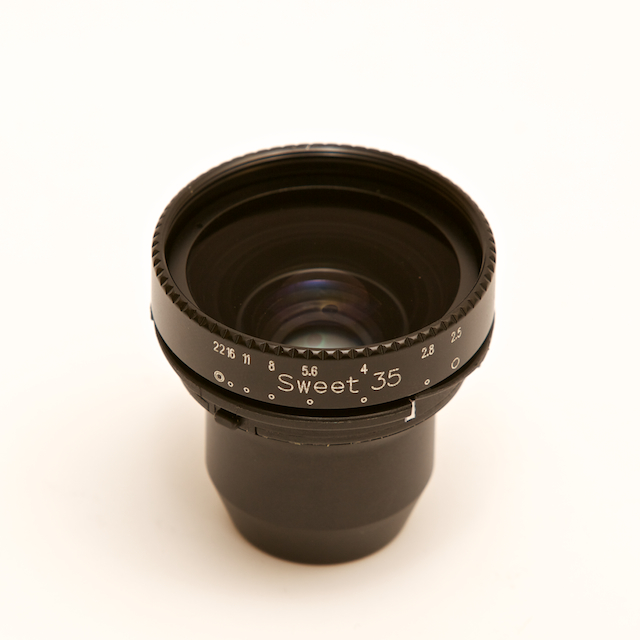
It’s here.  This, more than any other Lensbaby optic I’ve personally used, changes the Lensbaby from a fun tool, into a productive, creative asset.  Not that any of the other Lensbaby optics are bad, quite the contrary, I think that the Lensbaby system is and has always been a wonderful addition to my photographic arsenal, it’s just that up until now, one big challenge with any of the Lensbaby optics has been the inability to alter the size of the sweet spot via aperture adjustment quickly on the fly…  Now, you can bring all of the cool, selective focus effects into concert with the adaptability and exposure tuning qualities of a more standard lens.  Read on for a quick video and image samples…

Continue reading

*The Eyes Have It.

Eyes are not only a window, but a roadmap.  I’ve always felt that I can tell a lot about a person based on the shoes they wear, and the kind of person they are by their eyes.  Eyes tell you a story, they paint emotion and can determine the power of a portrait.  Of course there are many, many other elements to pay attention to, but a good portrait quite often starts and ends with the eyes.  Even in snapshots, making sure everyone’s eyes are at least open is one of the first things you check when glancing on the LCD screen right?  Assuming we’ve captured a shot with eyes open wide, getting them to pop can make the difference between a good portrait and a wow shot.  Here are a few techniques that I use, and have found from others, that can help make those eyes stand out.

Continue reading

*Alien Skin Bokeh 2

Bokeh (/bō’kɛ/): In photographic terms, has grown to mean the subjective quality of the out of focus areas in a photograph, and how a particular lens renders out of focus points of light (adopted from the Japanese term boke 暈け, meaning fuzzy, disoriented, et al).  Pronounced BO (as the bo in bone) and KE (as the ke in ken) if we are taking it directly from the Japanese word, while the “h” was added to help non Japanese speaking photographers pronounce this adopted term (see the wikipedia article for the history on the term and idea in photographic application).  While the definition, pronunciation and it’s subjective nuances are often debated as to it’s application in the photographic realm, it hasn’t stopped Alien Skin from creating a plugin that beautifully applies an out of focus blur to selected areas of an otherwise focused image.  With their second release, Bokeh 2 has added new bells and whistles as well as a more refined control of both radial and planar regions within an image and it’s area of focus.  Read on for examples and why I think this is a wonderful deal of a plugin.

Continue reading

*Presets! Less talk, more rock! Or, one easy way to streamline your workflow.

Presets, a key to streamlining your workflow. (*using a New York Times Mag Aperture3 preset by Zurli) - image ©tyson robichaud photography2010

Alright alright now.  No matter what your stance is on post processing, love it, hate it, meh, one thing that is hard to deny is that for the average photographer, digital photography requires a bit more time than shooting film on an image by image basis.  Yes, our feedback with digital is instantaneous, yes we are able to immediately adjust on the fly but one thing that has crept into the equation is the amount of time needed after shooting to upload, catalog, tag, process and archive all of your images (not to mention, many of us tend to take quite a few more images per outing now that we get more than 24 exposures a round).  One helpful tool is the use of presets, or actions.  These are a series of repeatable adjustments and instructions applied to your digital file so that you don’t have to manually adjust each and every one individually.  Read on for links, examples and tons of freebies for APERTURE, LIGHTROOM and PHOTOSHOP presets and actions…

Continue reading

*Which lens for which situation?

different tools for different applications

I like to spend time on flickr.  It is an amazingly diverse community of photographers ranging from absolute novices to consummate professionals.  One of the questions that come up in the gear groups there and in conversation with other photographers quite often is, “which lens should I purchase?”  With interchangeable lens system cameras coming down in price by the day it seems, it is becoming much more accessible to acquire high quality photographic tools.  One of the main benefits to an interchangeable lens camera, is just that, lenses!  Which to choose and why?  C’mon in and we shall discuss.  Before the end of this article, you too will know which lenses will provide you with the best bang for you buck, depending on which buck you choose to bang… Continue reading

*Aperture!

Controlling your aperture, and understanding it’s relationship with the exposure trifecta can be one of the most profound tools to manipulating the look of your photographs.  As we discussed in the trifecta post, the aperture is a hole which allows light to pass through the lens and onto the sensor or film.  By controlling the size of this hole, you control the amount of light passing through the lens.  This is it’s primary function.  Bright day, smaller hole.  Dark cave, larger hole to allow as much light in as possible.  The other feature of the aperture is its responsibility for your depth of field (DOF) or area in focus.  If you look at the picture above, you can see on the bar top, that it is blurry in the foreground, sharp at the first wine glass, and then fades quickly back into the out of focus area.  This was achieved by setting a large aperture, which when also getting the camera physically close to the subject in focus, it narrowed my DOF.

Continue reading

*The Exposure Trifecta. Or, how to shoot on Manual.

Have you ever taken a photo where your subject looks like a deer in the headlights from the flash while the ambiance in the scene behind them fades quickly to a black abyss?  Or, you try to catch your child scurrying around the house and no matter what you do, the picture turns out as a blurred mess?  This post is being written to help those (mainly my mom) who’ve asked me “how do you do that?” when they see a picture that avoids some of the common frustrating problems.  Whether it be a selective focus, blurred action to accentuate movement or an image that is intentionally over or underexposed, the key to photography is understanding the three main components of proper exposure control.  Hold on to your hat, I am going to help get you off of the ‘auto everything box’ and manipulating your own exposure in no time. Continue reading