*How do aperture and focal length affect the DOF or exposure on different sized sensors?

Okay, much like the “effective focal length” discussions, there seem to be many “effective aperture” discussions going around as many of these mirrorless interchangeable lens compact system cameras begin to really round out their lens offerings.  Well, I guess the micro 4/3 system has while the Samsung NX is getting there and Sony NEX system users still have a small handful of options, but not really here nor there.  The fact that so many lenses can be adapted across various formats can complicate the discussion.  Along with those who shoot with APS-C DSLR cameras, all references for focal length and depth of field seem to fall back to a full frame/35mm sized sensor as the benchmark.  There are some misconceptions as to how the aperture, or focal length affects the exposure or depth of field in these varying formats.

C’mon in, we’ll straighten this all out.

Continue reading

*Photovision 2012 discount, it’s that time of year again!


Hello everyone.  If you’ve followed me over the last couple years, you may have seen me post about Photovision, an instructional series that aims to help all photographers with insight into shooting, setting up a business, marketing and technique as well as offers discounts for many photographic goods and services.


I’ve subscribed for the last 3 years and have continued to glean tons of great information and would highly recommend anyone interested in getting a detailed behind the scenes look at many working professional photographers to do so as well.


This is my link which enables a substantial discount ($49 for six DVDs, normally $199, or access to instant content for a monthly price) and with signups enters me in a drawing, so if you do plan to subscribe, any subscriptions done through my link would be greatly appreciated 🙂

USE THE CODE “PVFAN” to gain the 75% discount via this link:


http://www.photovisionvideo.com?afid=65508


Thanks and happy shooting,


Tyson

*Sunny 16 and the Moony 8. Shootin’ the moon.

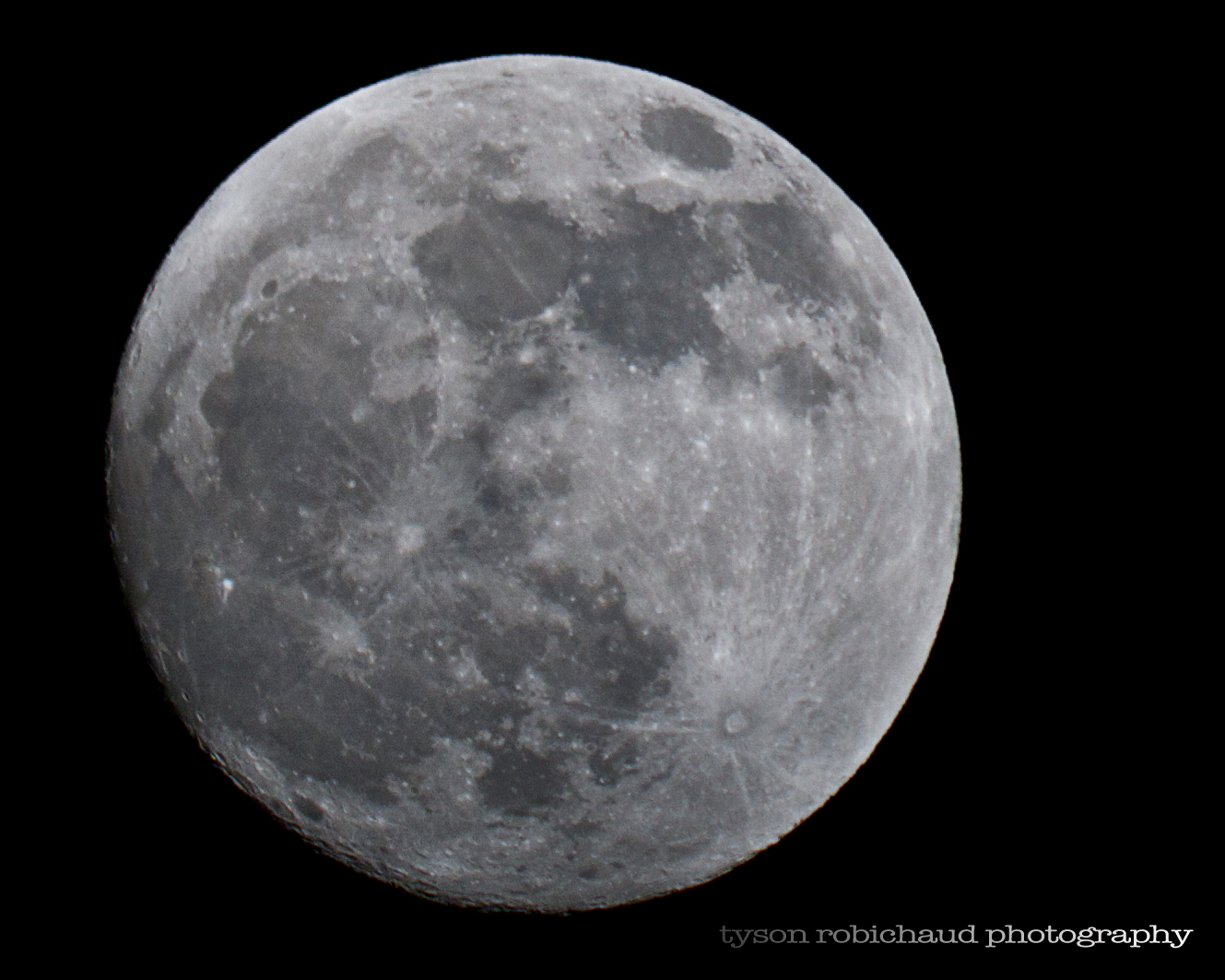
Most of us have heard of the Sunny 16 rule by where the rule of thumb for “proper” exposure on a sunny day would be setting your aperture to f/16 and your shutter speed to 1 / x, where X = your ISO setting.  Basically, at f/16 and shooting at ISO 100, we would set our shutter speed to 1/100 and you’d be set (1/200 at ISO 200, etc).  Of course there are other variables to take into consideration depending on your desired outcome or subject, but it gets you close enough.  Well, after some trial and error (emphasis on the latter) I came to realize that when shooting the moon, I was having a very hard time properly exposing it.  Wanting to eliminate as much noise as possible, I was shooting at lower ISOs and after some more trial I found that I was coming in at about f/5.6- f/8 when spot metering and compensating for the extra brightness (I figured I should account for about 2 full stops over midtone) with the same one over rule as the Sunny 16…  This got me wondering if there was in fact a night shooters rule of thumb, and there in fact is…

Continue reading

*DIY day! Using apps to create textures, plus free texture files.

The title just about says it all.  There are a multitude of free and cheap apps for smart phones nowadays and they can be more useful than just uploading dozens of pictures of your late night goings on directly to facebook.  Read on for downloadable freebies, suggested apps and a little instruction on how to best utilize these tools to come up with fun final images in photoshop…

Continue reading

*Everything you need to know about digital photography (well, almost). Two years of tips, tricks and various freebies, revisited.

With my blog’s second anniversary coming up, I wanted to thank everyone that has stopped by, commented and added to the content.  It’s been a fun couple of years and has been far more educational for me than I’d ever thought it would have been.  I wanted to make a list of my more popular posts as well as some that can help some of us who may be just stumbling into the fold.  Any of us who have recently acquired a new camera and may be wanting to learn how to use it to its potential, or are looking to build up a few post processing techniques, I’ve compiled some of the more useful and popular posts below…

Continue reading

*Establishing Hyperfocal distance! You mean like manually focusing?

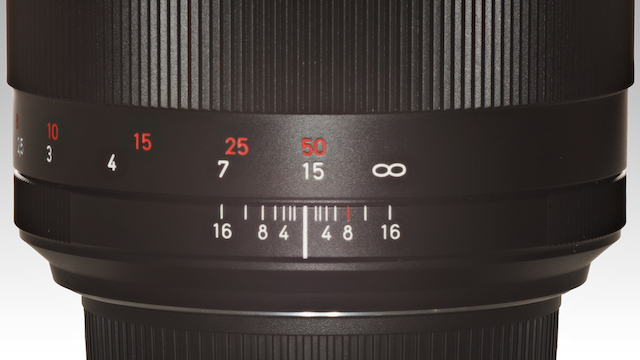
The hyperfocal distance at a given aperture on any lens will enable the photographer to “know” what will be in focus in the scene without having to re-focus between shots.  Hyperfocal distance is commonly defined as “the closest distance from which a lens can focus that will be acceptably sharp from half that distance through infinity.”  It is a technique which is particularly useful with smaller apertures (as in gaining a deeper depth of field) when shooting anything from street scenes to landscapes where the photographer requires an established area of focus from a fixed distance through infinity so that you don’t need to refocus between shots.  Follow me in and we’ll go over a simple way to determine your hyperfocal distance.

Continue reading

*HDR 101, Part 2 – Processing Dynamic Range

My final result

We’ve been out capturing dynamically diverse scenes in Part 1 of the HDR 101 series, now we get them onto the computer and realize that there are a variety of ways to achieve our vision.  From free-ware to thousands of dollars worth of software, there are options.  Some are better than others, and some offer a better bang for the buck (in my opinion).  Regardless, most all HDR software out there will offer you a free trial, so you can decide which works better for your vision.  That said, here are a couple techniques using Photoshop, Everimaging HDR, and a very popular HDR software, Photomatix, along with discount codes if you choose to purchase 🙂  Read on for more…

Continue reading

*HDR 101, Part 1 – Capturing Dynamic Range

the scale of luminance values as far as the eye can see…

Politics, Religion, Economics, HDR.  There seems to be little in the photographic world that starts such heated discussions as the concept of HDR photography and processing.  Truth of the matter is, it is a very popular technique and can be done with a multitude of results, some more visually shocking than others, but I believe HDR gets a bad rap too often.  Let me start off by saying, I am not an HDR expert.  I do not feel that my techniques are an end all by any means, but I have figured out some very helpful techniques that I feel can benefit those looking to get into, or better understand capturing and processing HDR imagery.  For me, capturing the dynamic range of a scene is the primary concern while the way these bracketed images are processed is an entirely personal decision.  Too often, I see people tonemapping single images, or running them through an HDR-like software to give it that grungy, gritty look and calling it “HDR.”  While many of those images have a very cool look to them in their own right, it still doesn’t quite qualify as a high dynamic range photo by definition in many cases.  C’mon in and we can discuss ways to capture the whole dynamic range of any particular scene along with some tips and tricks.

Continue reading

*A photographic study in composition, Antoni Gaudí style.

Antoni Gaudi 1852 – 1926

This is the third article in what I’m now calling the “Masters” series.  First we had Lighting a la Rembrandt, then Color Theory with Matisse, and now I want to explore Composition through the work of Gaudi.  I hope you enjoy and would love to hear from you folks about future articles you’d like to see!  Enjoy…

Continue reading

*About a boy, and his Hasselblad.

It’s easy to go through much of life paying attention to the times that one is unlucky, but if we spend all of our energy on ignoring the times we are lucky, it is easy to miss out on a lot of the fun life can provide.  I remember hearing about Hasselblads back in the day.  I’d never really considered medium format to be something I’d ever realistically get to play around with.  My limited expendable income was always directed to other areas.  As fortune and luck would have it, the father of a girl that I was dating, was a photographer.  Not just a photographer, but a connoisseur of all things photographic.  His history with photography was inspiring, his knowledge intriguing, his collection of cameras was a thing of beauty.  I knew, I needed to marry this girl.

Continue reading