*Shooting tattoos

Tattoos by Josiah Laughlin Photography by TysonRobichaud

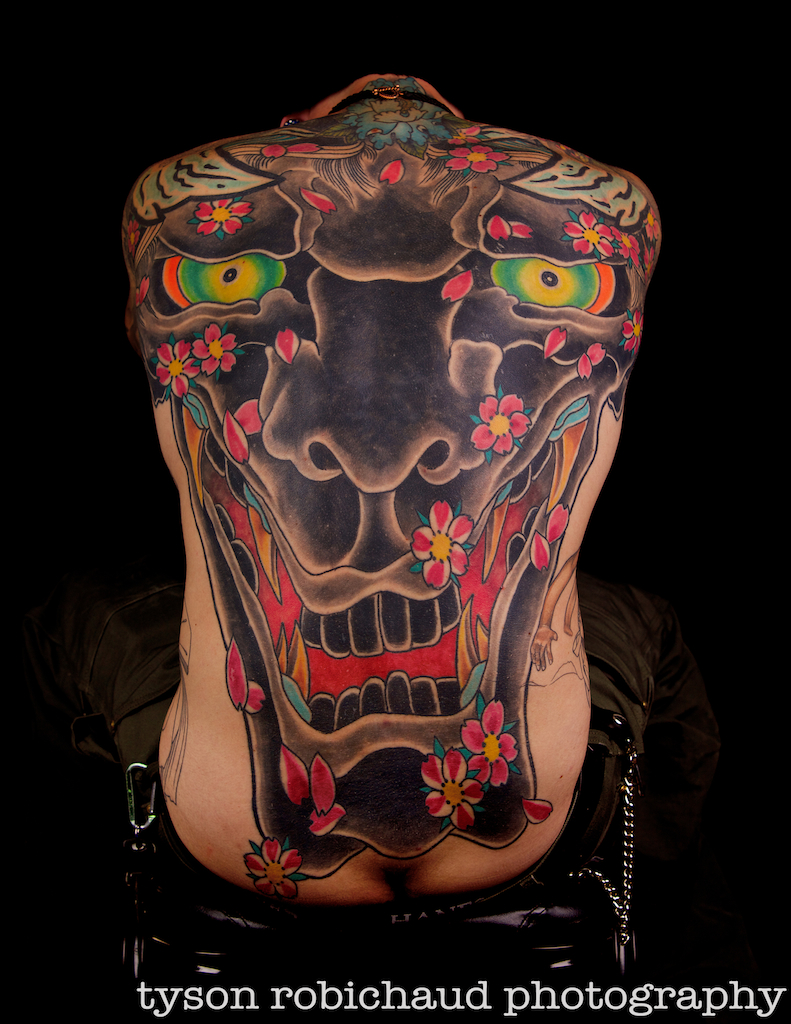
Shooting art can be a tricky task. Replicating the colors, texture and vibrance all while lighting it properly and controlling detail ruining reflection is challenging. Every canvas provides it’s own nuances and unique elements needing to be worked around, especially a canvas that is 3 dimensional and isn’t entirely static. All of these tattoos are original works by my friend Josiah Laughlin. He tattoos here in Portland, Oregon at Imperial Tattoo, and this is an ongoing series we’re collaborating on to document his portfolio. C’mon in to see more of his work and read through diagrams on how I shot them.

Continue reading

*Panaleica DG Summilux 25mm f/1.4 ASPH, I couldn’t help myself.

It’s a hard thing to admit to myself really.  Being that I’ve been in love with the Lumix 20mm f/1.7 pancake lens for so long, I never really thought about acquiring a lens for the Micro 4/3 format that provided such a similar angle of view.  Now that I have, I must make a decision, which do I keep…

Continue reading

*How do aperture and focal length affect the DOF or exposure on different sized sensors?

Okay, much like the “effective focal length” discussions, there seem to be many “effective aperture” discussions going around as many of these mirrorless interchangeable lens compact system cameras begin to really round out their lens offerings.  Well, I guess the micro 4/3 system has while the Samsung NX is getting there and Sony NEX system users still have a small handful of options, but not really here nor there.  The fact that so many lenses can be adapted across various formats can complicate the discussion.  Along with those who shoot with APS-C DSLR cameras, all references for focal length and depth of field seem to fall back to a full frame/35mm sized sensor as the benchmark.  There are some misconceptions as to how the aperture, or focal length affects the exposure or depth of field in these varying formats.

C’mon in, we’ll straighten this all out.

Continue reading

*Micro4/3 Holy Trinity: It’s not the size of the boat, it’s the motion in the ocean.

I’ve had a little time now with the absolutely minascule Lumix G 14mm f/2.5 pancake lens and I have to say, I have no problem proclaiming that I have a tiny lens. A truly impressive optical feat considering it’s being used on a 17.3mm x13mm 4/3 sensor. Of course, there is the beautiful Olympus 12mm f/2 lens, but at 2.5x the cost, could one be satisfied with the trade offs and savings? Beyond that you have the much ballyhooed 20mm f/1.7 pancake which is amazing in its own right, but for a bit more coin you can get the Panaleica 25mm f/1.4… And then of course, the Oly 45mm f/1.8 which has been universally praised for both quality and price, but the other Panaleica lens, the 45mm f/2.8 macro should certainly get some attention too. Folks, I think we have a few candidates for the micro 4/3 holy trinity.

Continue reading

*Everything you need to know about digital photography (well, almost). Two years of tips, tricks and various freebies, revisited.

With my blog’s second anniversary coming up, I wanted to thank everyone that has stopped by, commented and added to the content.  It’s been a fun couple of years and has been far more educational for me than I’d ever thought it would have been.  I wanted to make a list of my more popular posts as well as some that can help some of us who may be just stumbling into the fold.  Any of us who have recently acquired a new camera and may be wanting to learn how to use it to its potential, or are looking to build up a few post processing techniques, I’ve compiled some of the more useful and popular posts below…

Continue reading

*Establishing Hyperfocal distance! You mean like manually focusing?

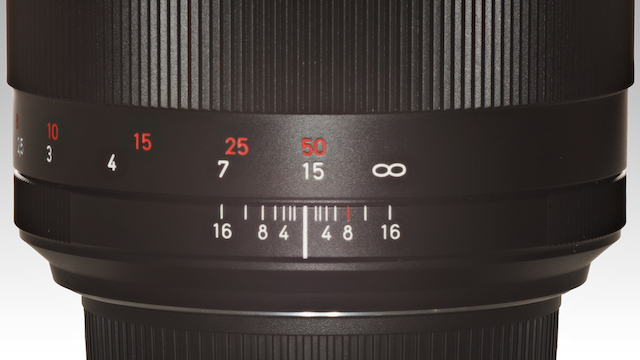
The hyperfocal distance at a given aperture on any lens will enable the photographer to “know” what will be in focus in the scene without having to re-focus between shots.  Hyperfocal distance is commonly defined as “the closest distance from which a lens can focus that will be acceptably sharp from half that distance through infinity.”  It is a technique which is particularly useful with smaller apertures (as in gaining a deeper depth of field) when shooting anything from street scenes to landscapes where the photographer requires an established area of focus from a fixed distance through infinity so that you don’t need to refocus between shots.  Follow me in and we’ll go over a simple way to determine your hyperfocal distance.

Continue reading

*WILL WORK FOR FUN! Your questions about life, love and photography, answered.

Do you want to know more about a particular technique?  Are you curious about purchasing a particular camera or lens?  Do you ever see an image and wonder “how do they do that?”  Ask away, I will do my best to answer anything you can think of, or at least find someone and direct you to who can.  I enjoy all of the email I get, and do my best to answer each of them as accurately as I’m able.  So, I thought, “why not try and open this up so that everyone can enjoy and benefit?”  As summer comes into focus, I’m finding my time being stretched in quite a few different directions, juggling projects and life, so let me know what you are interested in and I’ll do the leg work.  Hopefully we can all learn something along the way!  Go ahead and drop a comment below, or email me and I will answer them/showcase them as they come in. Read on…

Continue reading

*Focal Length, Crop Factor and Field of View

How does sensor size actually affect focal length?

Focal length?  Effective focal length?  Actual focal length?  Crop factor?  Do you get more reach with a crop sensor?  Is it equal to a longer focal length?  There are some misconceptions surrounding what happens when a lens is used on cameras with different sensor sizes.  Let’s have a look at the differences between a full frame, APS-C and micro 4/3 sensor.

Continue reading

*Your Micro 4/3′s camera + your existing lenses = limitless fun.

so much for compact...

so much for compact…

Who cares that Olympus and Panasonic have released relatively few lenses, mainly slow zooms, for the micro 4/3’s cameras?  Adding m4/3 mount adapters to your bag opens up a bevy of hundreds of lenses.  What you gain in variety though, you may loose in automated functionality.  Continue reading

*Which lens for which situation?

different tools for different applications

I like to spend time on flickr.  It is an amazingly diverse community of photographers ranging from absolute novices to consummate professionals.  One of the questions that come up in the gear groups there and in conversation with other photographers quite often is, “which lens should I purchase?”  With interchangeable lens system cameras coming down in price by the day it seems, it is becoming much more accessible to acquire high quality photographic tools.  One of the main benefits to an interchangeable lens camera, is just that, lenses!  Which to choose and why?  C’mon in and we shall discuss.  Before the end of this article, you too will know which lenses will provide you with the best bang for you buck, depending on which buck you choose to bang… Continue reading