The first round produced a bit of a shocker with the GX7 pulling out a surprise partial victory in the IBIS battle (read round 1 here). The higher res EVF and LCD also fell in favor to the Panasonic. Now, let’s look at the physical build and ergonomic qualities of these two cameras… ROUND 2!
Tag Archives: lumix
*The GX7 vs the OM-D E-M5, battle for my affection, Round 1 – IBIS, EVF’s & LCD’s
In this corner, Panasonic’s new, compact, fully featured camera weighing in at around a grand, the DMC GX7! And his opponent, the current system champion in this price range, with many of the same features and weighing in at a cool grand as well, the Olympus OM-D E-M5!
I’ve had the GX7 for about a month now and feel that I’ve been able to give it a proper run through in a variety of shooting scenarios and have been comparing it to my OMD EM5 just about every step of the way. I tried originally to compare these two cameras against each other in all ways I find them to differ, but the article has gotten ridiculously long, so we will break this into 3 rounds… So, how do these two, high end pro-sumer micro 4/3 models compare to one another? C’mon in and I’ll give you my opinion on where each of these cameras wins against the other starting with the in body image stabilization, electronic viewfinders and LCD screens. Round 1, FIGHT:
*The Panasonic GX7, an Evolution, part 1
In this review, I want to focus on and outline my favorite additions that the GX7 has introduced to micro 4/3 shooters or those who have been shooting other Panasonic m4/3 cameras from a features standpoint. I’d also like to look at how the GX7 has progressed physically from the GF1 and GX1. Many of the features on the GX7 are not unique, but may be new for micro 4/3, or at least Panasonic system users, and I’ve been curious to shoot with this camera since the rumors started circulating. In this first part, I want to go over how this camera feels in the hand, how it interacts with the shooter, and what the new bells and whistles have provided vs the previous cameras. The next part will focus on the performance of the camera, actual image quality, et al (click here to read Part 2). I will also be comparing this camera to my Olympus OM-D E-M5 in a future article, but for now, we’ll focus on the GX7 and the advancements it has made compared to it’s predecessors.
*Ladies and Gentlemen, The Panasonic GX7: A first look.
When Panasonic started to leak the GX7 micro 4/3 camera, I, along with many micro 4/3 fans started to pine for what seemed on paper to be one of the best offerings for the system yet. Compact, nice grip, IBIS, focus peaking, a step forward in IQ, good video options, integrated EVF, WiFi, rugged chassis… I’m no fanboy, but I will admit to feeling that Panasonic has done a better job at the interface side of things, compared to Olympus in my experience with cameras from both manufacturers. If I could gain access to what I saw as Oly’s two benefits in IBIS and newer sensor tech in a Pana body with it’s more streamlined, yet still customizable interface, I had to see if it could live up to the hype. I’ve long felt that if Oly could re-engineer it’s interface and remove some of the frustrating quirks that plagued the EM5, or, if Panasonic could take a step forward in sensor performance and integrate a decent IBIS system, either could have a quintessential micro 4/3 juggernaut on their hands. Is the GX7 the answer to those desires?
*Panasonic Lumix 100-300mm, waste of time, or amazing value?
One huge benefit to a smaller sensor is the effective focal length multiplier. Sure you can crop into an image captured at a wider angle, or on a larger sensor but as we have seen in the focal length vs sensor size post, when utilizing a smaller (relative to full frame) sensor, you can actually decrease your depth of field with the same focal length if shot from a fixed location, all while generically increasing your focal length by way of the effective multiplier in that smaller sensors crop into the larger image circle. Aperture is aperture as far as exposure is concerned, so even by this standard, f/5.6 is relatively quick when you consider the focal length and price. This said, is the Lumix G Vario 100-300mm f/4-5.6 (<UPDATE! click the link to see it at B&H, and if you click on “Savings Available” the price is down to $499 if you purchase one of the three things that qualify, like the $10.99 software…) worth the price of admission when you consider you get a 600mm lens able to shoot at f/5.6? Let’s see…
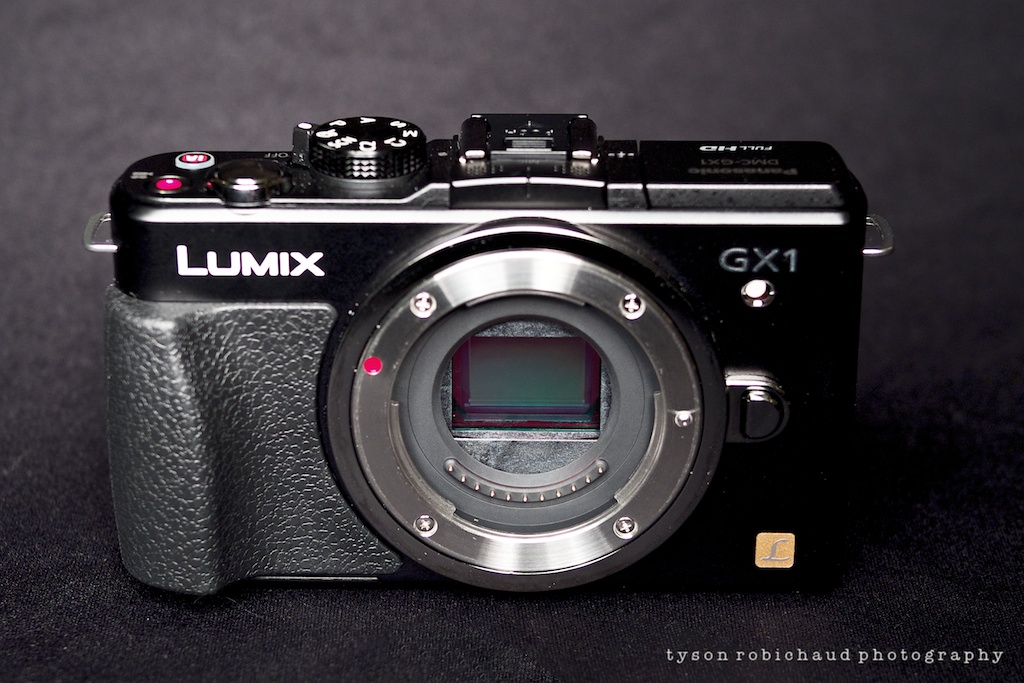
*My, how the mighty (prices) have fallen. The GX1, best bang for the buck?
I’m sure there are new cameras on the horizon. With every camera manufacturer pumping a few new bells and whistles into newer body styles and wrapping it around warmed over sensor tech, those among us who play the patient opportunists really benefit. I held off on the GX1 when it was released and opted for the G3 when upgrading from my GF1. I gained the beautiful EVF, and at the time saved about $500 (when looking at the GX1 + add on EVF). I’ve since been running a two camera setup (much as I do with my full frame work setup) as it allows me to always have a backup as well as be able to eliminate much in the way of lens changes. Because I use the Olympus OM-D E-M5 as well, and I’ve recently traded my G3 to my brother in law for favors yet to be determined, I felt I could justify a compact body, sans EVF again. Enter the GX1 which is now down to only $250 just about everywhere! (it’s available at B&H – CLICK HERE – with 2% reward and free shipping). C’mon in to see a couple shots of and with the GX1…
*The Dark Side of Amsterdam
While the title may allude to a sinister, Imperial-esque characterization of a city known for many a questionable, extra curricular activity, I mean to speak quite literally. For anyone who’s read my blog for more than a year, you may know that I travel to Amsterdam once a year on business. Because of said business, coupled with the late time of year and Holland’s geographical placement, I rarely get to experience it in the light of day. With a +9 hour difference to tackle, and tiring hours spent working while there, my window for photographic opportunity normally falls within about an hour and a half between when I get done working, and the inevitable collapse into a jet lagged coma that prematurely greets the end of each day. Luckily, this year, this window happened to open while the weather was crisp, but dry as it gave me the ability to wander around, camera in hand to document a bit of my annual stay in what has become my home away from home.
*Panaleica DG Summilux 25mm f/1.4 ASPH, I couldn’t help myself.
It’s a hard thing to admit to myself really. Being that I’ve been in love with the Lumix 20mm f/1.7 pancake lens for so long, I never really thought about acquiring a lens for the Micro 4/3 format that provided such a similar angle of view. Now that I have, I must make a decision, which do I keep…
*G-cubed in Chi-town
Where else in the world would one want to be than Chicago in the depth of winter I ask you? I know it may sound somewhat sadistic, but I’ve really come to enjoy walking around the windy city when the river is frozen over, the streets are coated with a salted crust and the wind makes your face feel like someone repeatedly smacked you with a frozen fish. I’ve also come to realize the genius of having the largest sail show in the midwest at the same time every year. It may hurt to go outside, but when you get into the boat show, your thoughts immediately transport you to warmer times, and you feel any potential financial inhibitions start to ease with the promise of a midsummer breeze on the lake, the water lapping against your bow and the only ice you encounter is inside your cooler. On the business side of things, orders in January mean that you can actually get everything built before sailing season starts.
Read on for more shots and mumblings…
*Micro4/3 Holy Trinity: It’s not the size of the boat, it’s the motion in the ocean.
I’ve had a little time now with the absolutely minascule Lumix G 14mm f/2.5 pancake lens and I have to say, I have no problem proclaiming that I have a tiny lens. A truly impressive optical feat considering it’s being used on a 17.3mm x13mm 4/3 sensor. Of course, there is the beautiful Olympus 12mm f/2 lens, but at 2.5x the cost, could one be satisfied with the trade offs and savings? Beyond that you have the much ballyhooed 20mm f/1.7 pancake which is amazing in its own right, but for a bit more coin you can get the Panaleica 25mm f/1.4… And then of course, the Oly 45mm f/1.8 which has been universally praised for both quality and price, but the other Panaleica lens, the 45mm f/2.8 macro should certainly get some attention too. Folks, I think we have a few candidates for the micro 4/3 holy trinity.